
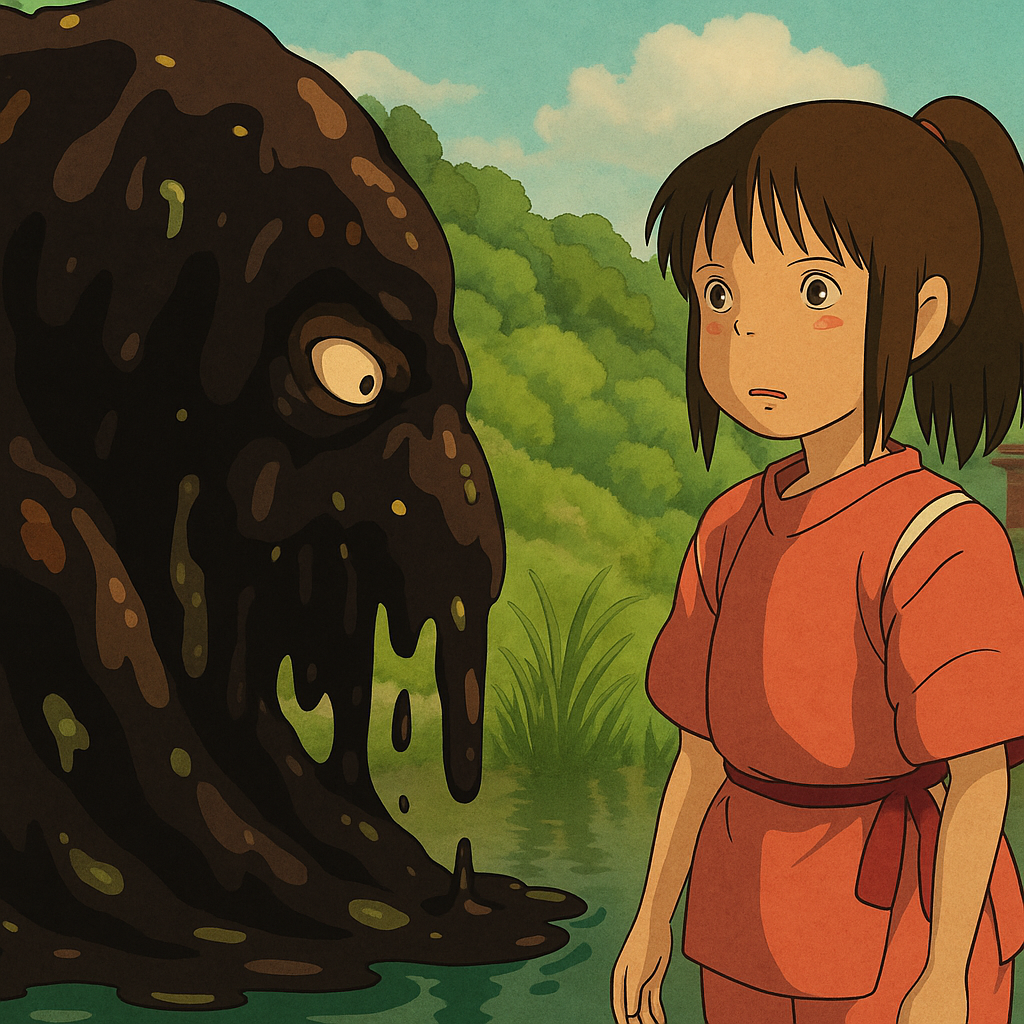
You thought Spirited Away was just a fantasy, but Hayao Miyazaki is sneaking a green message in every frame. Take the now-famous “stink spirit” scene: a massive, mud-covered creature arrives at Chihiro’s bathhouse, horrifying onlookers with its foul smell. Under all that sludge and garbage, Chihiro discovers it’s actually a once-pure river god, clogged by human waste. As Miyazaki himself once noted, in his grandparents’ day people believed “spirits existed…in trees, rivers…wells, anything…we should treasure everything because there is a kind of life to everything.”. In other words, this grotesque spirit is a textbook environmental allegory: a polluted river begging to be cleaned up. In fact, critics agree this scene shows Miyazaki’s anger at pollution, literally pulling discarded bicycles and cans from the river-god’s wounds as Chihiro bathes him.
Meanwhile, the bathhouse itself doubles as a microcosm of greed and capitalism. Chihiro’s own parents hardly escape criticism: they gorge themselves at an unattended buffet, then transform into pigs – Miyazaki’s classic symbol of gluttony and consumption. (It’s no accident Miyazaki quips that pigs are “voracious creatures that eat everything,” even using them to represent modern Japan.) Even the silent No-Face spirit goes on a binge, devouring spirits and gold until he becomes monstrously large – a visual feast underscoring unbridled consumerism. One scholar sums it up well: “This film plays a concerto on greed…with Yubaba and her minions, with Chihiro’s parents, and, most fearfully, with No-Face.”. The glinting gold, overflowing food stalls, and name-stealing contract in the bathhouse all point to capitalist excess. (In fact, Yubaba literally steals part of Chihiro’s name when she signs on – reducing her inquisitive “Chihiro” to a mere number “Sen,” symbolizing how work can strip us of identity.)
Every Studio Ghibli film whispers about nature vs. machines. Think of Princess Mononoke (1997): San and the wolf gods stand against a sprawling ironworks, a clear statement on industrialization. Or Nausicaä of the Valley of the Wind (1984), where a beautiful-yet-toxic jungle hints at ecological collapse. Even My Neighbor Totoro is essentially an elegy for a vanishing rural Japan. Critics note Miyazaki’s films are never just pretty backdrops – they turn nature into characters with power and voice. In Spirited Away, the polluted river and the forest shrine steamrollered by human development echo the same warning. Scholar Susan Napier points out that Princess Mononoke “anticipates the issues of industrialization,” and that loss of nature is a recurring theme. In Ghibli’s world, then, Chihiro’s journey isn’t unique – it’s part of a broader green legacy that urges us to respect the environment.
Key Eco-Symbols in Spirited Away:
- The Stink Spirit – A river god choked by trash, cleansed by Chihiro’s compassion (just as Miyazaki once campaigned to clean a real river and found a bicycle in the muck).
- Gluttonous Greed – Chihiro’s parents literally turn into pigs (Miyazaki’s symbol for insatiable consumption) and No-Face spawns gold from greed. These creatures reflect how overconsumption can dehumanize us.
- Capitalist Bathhouse – Yubaba’s name-stealing contract shows how modern work can steal our identities. The bathhouse is basically a commentary on hustle culture: its workers surrender their names (and selves) in exchange for wages.
- Ghibli’s Green Context – Princess Mononoke’s wolf gods and Nausicaä’s toxic jungle mirror Spirited Away’s themes. Miyazaki isn’t subtle: across his films he challenges industrial greed and reminds us that nature is alive and precious.
So next time you watch Spirited Away, don’t skip those weird bathhouse scenes. The next time the train glides through misty woods, remember: it’s more than eye candy – it’s Miyazaki’s plea to slow down and cherish the world around us. 🌏💚
Your turn: Spotted any other hidden messages in Spirited Away or other Ghibli films? Share this post with fellow film fans and let us know in the comments which Miyazaki moment blew your mind!

Leave a Reply